AI integration & document processing
Invoices, contracts, reports, emails: in most organisations knowledge is locked away in documents that people retype, check and pass along by hand. With AI document processing we take that work off their hands - securely embedded in your existing systems.
The trade-off
Integrating AI into your business process - not next to it
Understand first, then build - we work alongside your people.
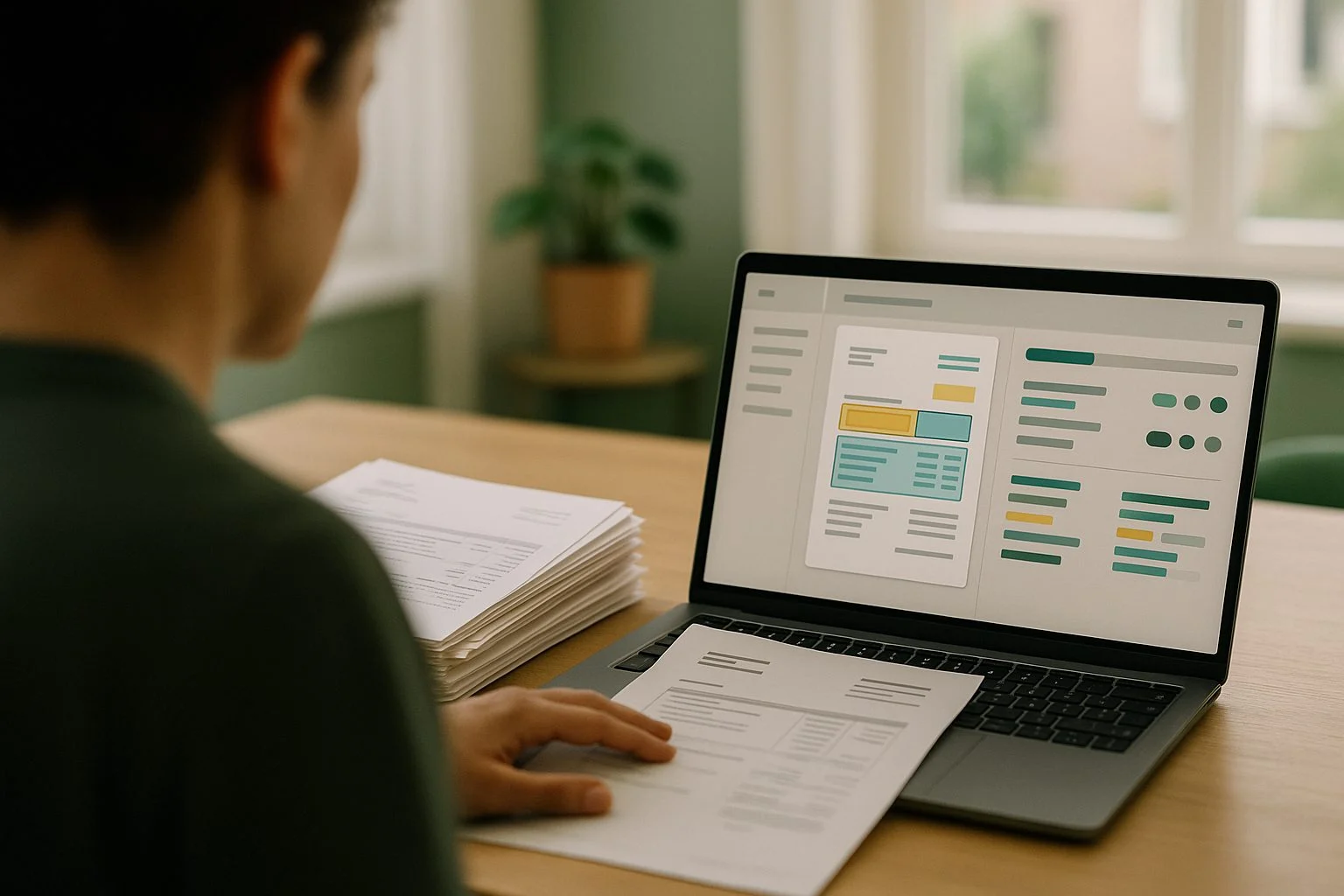
Sound familiar? Every morning a stack of PDFs someone has to open, assess and copy into the system. Data gets entered twice, errors creep in, and the real work only starts once the retyping is done. Standalone AI tools rarely solve that challenge: they know nothing about your processes and systems.
We take a different approach. As part of our AI implementation we integrate language models directly into your workflow: documents are read and structured automatically, and your people check and decide. Simple at the front, the complexity solved behind the scenes.
See our approach to AI implementation →
The difference between an AI experiment and a working solution is integration.
The signals
- Every morning a stack of PDFs someone has to open, assess and copy into the system
- Data gets entered twice and errors creep in
- The real work only starts once the retyping is done
Start here - AI QuickScan
An AI QuickScan of one session delivers a prioritised roadmap.
We scan your document flows and processes and score the opportunities on value and effort. You leave with a prioritised, realistic roadmap.
1 session
scan of your document flows
1 roadmap
prioritised and realistic
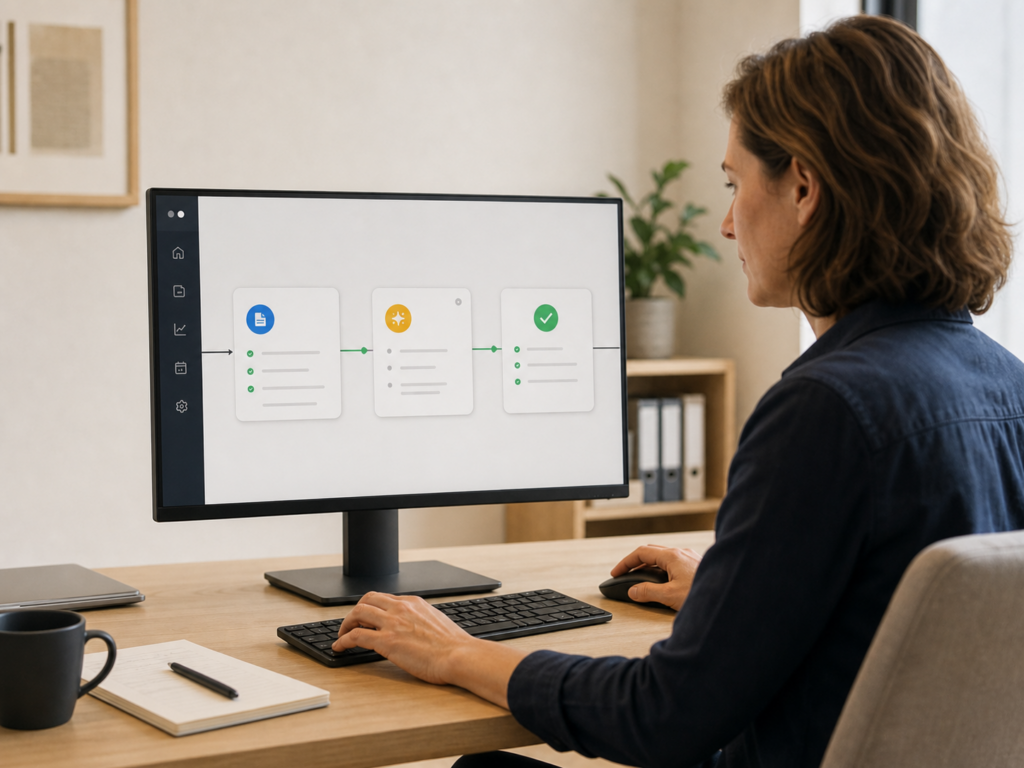
The difference between an AI experiment and a working solution is integration. A separate chat window someone drags documents into delivers little; the work only changes when AI becomes part of the workflow itself. That is why we build document processing directly into your existing environment: a document comes in, gets read and structured, and the result appears where your team already works.
In practice that looks something like this: incoming invoices recognised automatically and queued for approval, contracts from which the relevant clauses are extracted and compared, or case files where data from dozens of separate documents comes together in a single overview. Always with the same principles: every result is traceable to the source document, and a human stays in control of what happens with it.
Document processing is often the start. The same foundations - secure access to your data, measurable quality - also carry AI assistants and agents that carry out tasks autonomously. And because the results have to land in your systems, where needed we build the API integrations that connect everything reliably.
- Automated processing of invoices, contracts and forms
- Data from documents straight into your own systems
- Classification and routing of incoming mail and email
- Decision support with verifiable, traceable answers
- Human-in-the-loop review at every critical step
Our approach
How we approach AI document processing
No months of upfront planning: we start small, measure what works and build from there.
1 session + week 1-2
AI QuickScan & quality criteria
We scan your document flows and processes and score the opportunities on value and effort. You leave with a prioritised, realistic roadmap. After that we collect representative documents and agree measurably when a result is good enough. What you don’t measure, you can’t trust.
week 2-6
Pilot on real documents
The most promising document flow becomes a working pilot on your own documents, running alongside the existing process. Your team judges the results.
ongoing
Integration & production
What demonstrably works is connected to your systems and goes live in a controlled way. The same team monitors quality and keeps improving.
In practice

Letselinzicht B.V.
The new calculation standard for personal injury
Calculations that used to be specialist work in separate documents are now transparent, uniform and reproducible per file - as a product on the market.
View case →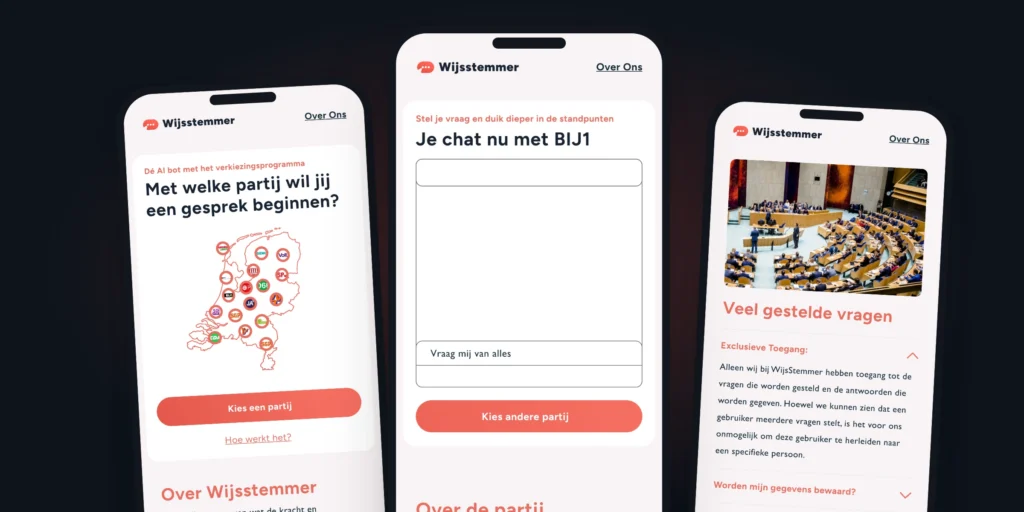
Wijstemmer
Talking to the party manifesto itself
Ten days of building and eleven parties given a voice - the technology was not the problem, the name was.
View case →This is how we built Letselinzicht around exactly this principle: specialist calculations that used to be buried in separate documents are now transparent, uniform and reproducible per case file. Fourteen legal professionals were already using it daily before launch.

Not sure whether your document flows are suited to this? Rik van Dijk, partner at eenvoud, will happily take a look with you - honest about what AI document processing does and does not solve. Or start with an AI QuickScan.
Frequently asked questions
What you want to know before you start.
What happens to our data and documents?
Your documents remain yours. We work model-independently and choose the safest route per situation: on your own infrastructure or in the EU cloud, with data processing agreements that fit the GDPR. Sensitive data is not used to train someone else’s models, and we record up front which data is processed where.
How do you prevent errors and hallucinations?
By never trusting AI blindly. Every result is traceable to the source document, we agree measurable quality criteria before go-live, and at critical steps a human reviews before anything happens. Borderline cases are not guessed at, but put to your team.
Does this work with our existing systems?
Yes, that is precisely the point. We integrate document processing into the systems you already use - via existing APIs or with an integration we build ourselves. Your team doesn’t need an extra tool; the results appear where the work already happens.
What does AI document processing cost?
That depends on your document flows and systems, so we don’t quote a figure before we know them. We deliberately start small: an AI QuickScan of one session delivers a prioritised roadmap, and from there we work in small, budget-controlled steps. After the first conversation you get a concrete estimate.
Do we need AI expertise in-house?
No. You know your documents and processes; we bring the AI and integration expertise. During the project your team learns to work with the results and judge them - that’s all that’s needed. The technology underneath remains our job, also after go-live.
Which technologies do you use for document processing?
We read documents automatically with Azure Document Intelligence, so text, tables and fields come out as structured data. Language models such as Claude and ChatGPT help turn that output into usable information. That is how we developed receipt recognition in the personal injury platform Letselinzicht. The result lands where your team already works: in Microsoft 365, so people can continue from there, or directly in your accounting system, such as Exact Online.