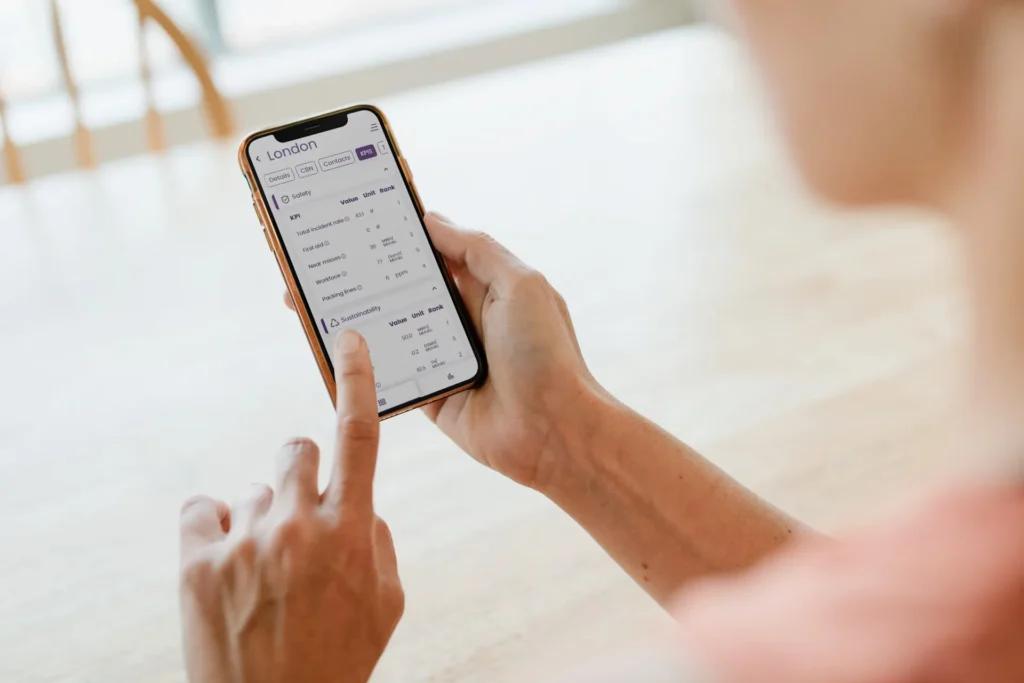
Taskmaster is a product of Lijn2, a Dutch software company. It helps organisations handle and steer workflows with intelligent forms and flows. Those organisations sit in a wide range of sectors and use Taskmaster for customer contact records, quality measurements, applications and intakes, inspections, ticketing and onboarding. The product sits close to daily work: asking questions, recording choices and getting the next step to the right person.
We built the first version of Taskmaster in 2019. A year later came a full rebuild, with a Laravel API and a Vue front end, so the product became solid enough for further growth. We have been developing it without interruption ever since. Lijn2 brings market knowledge and product direction, we translate that step by step into working software, from faster searching in large work queues to security and upgrades.
Custom route
Every case follows its own path
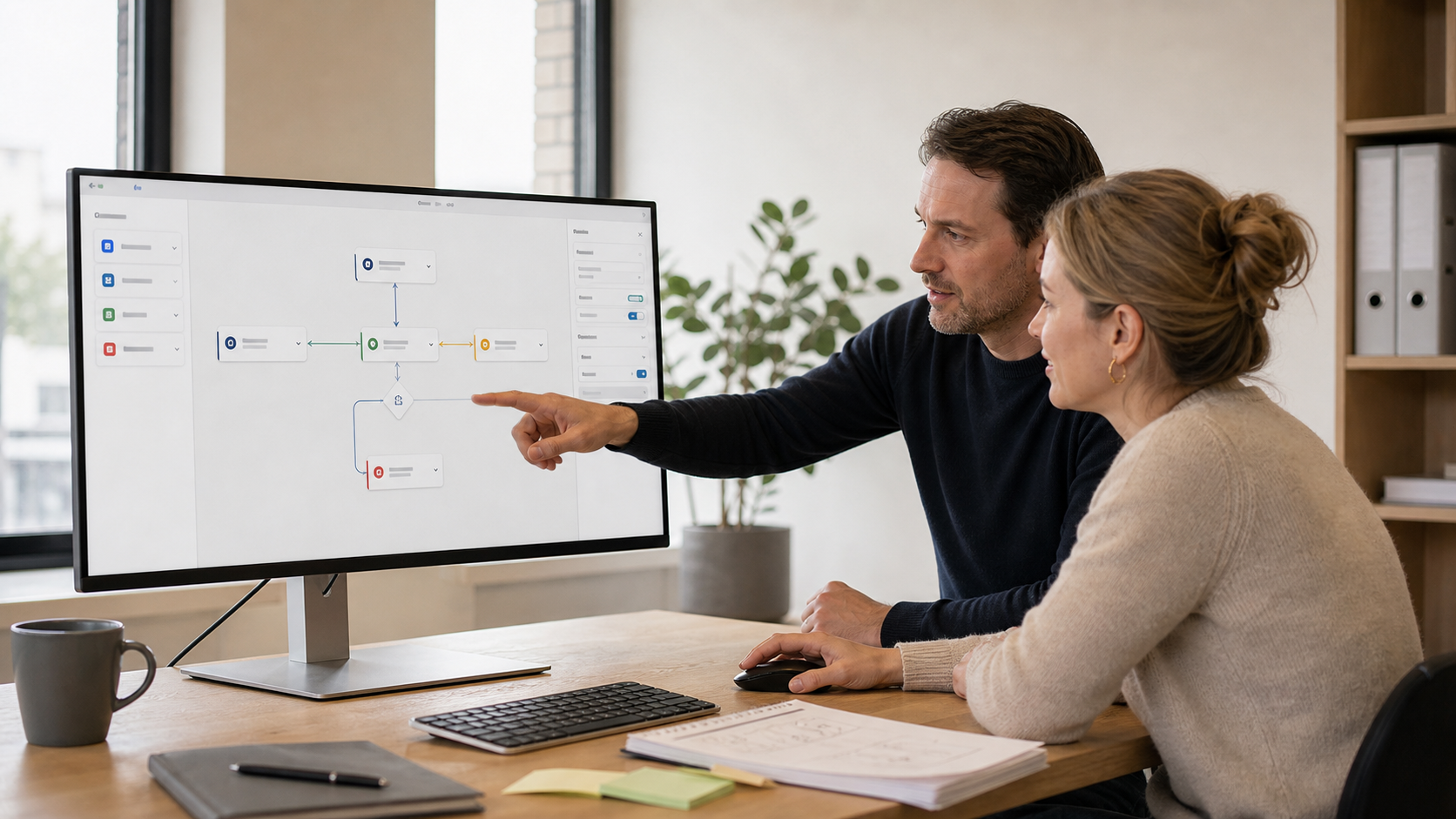
A case travels through the flow step by step: forward, back for more information, or on to a different end status. The answer to a question decides the route, so the process is fixed and still stays adjustable.

The challenge
Many processes change faster than the software around them. An extra check, a different order or a new handover then calls for IT, a supplier and waiting time. For teams that work with cases every day, that feels slow and roundabout. Lijn2 wanted to turn that around: administrators had to be able to change their own workflow in the browser and adjust it without code.
That is where the design tension sat. Taskmaster had to have enough power for processes with statuses, roles, priorities, deadlines, scores and validations. At the same time, managing it could not feel like software development. An administrator has to understand what happens before a flow goes live for customers.
Managing it had to move with the work.
Our approach
We developed Taskmaster around the actions that administrators, staff and managers need every day:
- Administrators build forms per process, with statuses and routing to the next question or status
- Eighteen question types, scores and validation rules give structure to input without custom work for every change
- Staff work from a work queue; cases are offered on the basis of priority, deadline and role
- An open case is locked, so two people are not working on the same thing at the same time
- The system records for every step who did what, when it happened, which status applied, who owned it and how long it took
- Power BI reports show progress and bottlenecks for managers
With every new feature the question is the same: can the administrator explain, test and change this themselves? If not, the solution is not ready yet. Technology has to make room for the process here, not fix the process in technology.

The result
Taskmaster gives teams one way of working per process, while the set-up can differ per client. Staff see which case is up next and who is working on it. Planners have to call, e-mail and check less, because priority, deadline and role steer the work queue. That saves planners hours of coordination every week and brings calm to the operation. Managers look at progress, lead time and bottlenecks in Power BI, so adjusting does not have to be a matter of feel. For Lijn2 the product means new client processes can be set up faster, without every change ending up with development.
Calm in the work queue.
After seven years, Taskmaster has come through a first version, a full rebuild and years of product development. We are still developing what counts in daily use: speed in large work queues, tighter security and upgrades that keep the product healthy.
“Our planners have gone from firefighting to actually planning. It fits how we work - not the other way around.”
Michiel van Baak
Co-founder, Lijn2
Let’s talk
Tell us about your challenge. We’ll think along.
A reply within one working day. No account managers, no sales pitch.