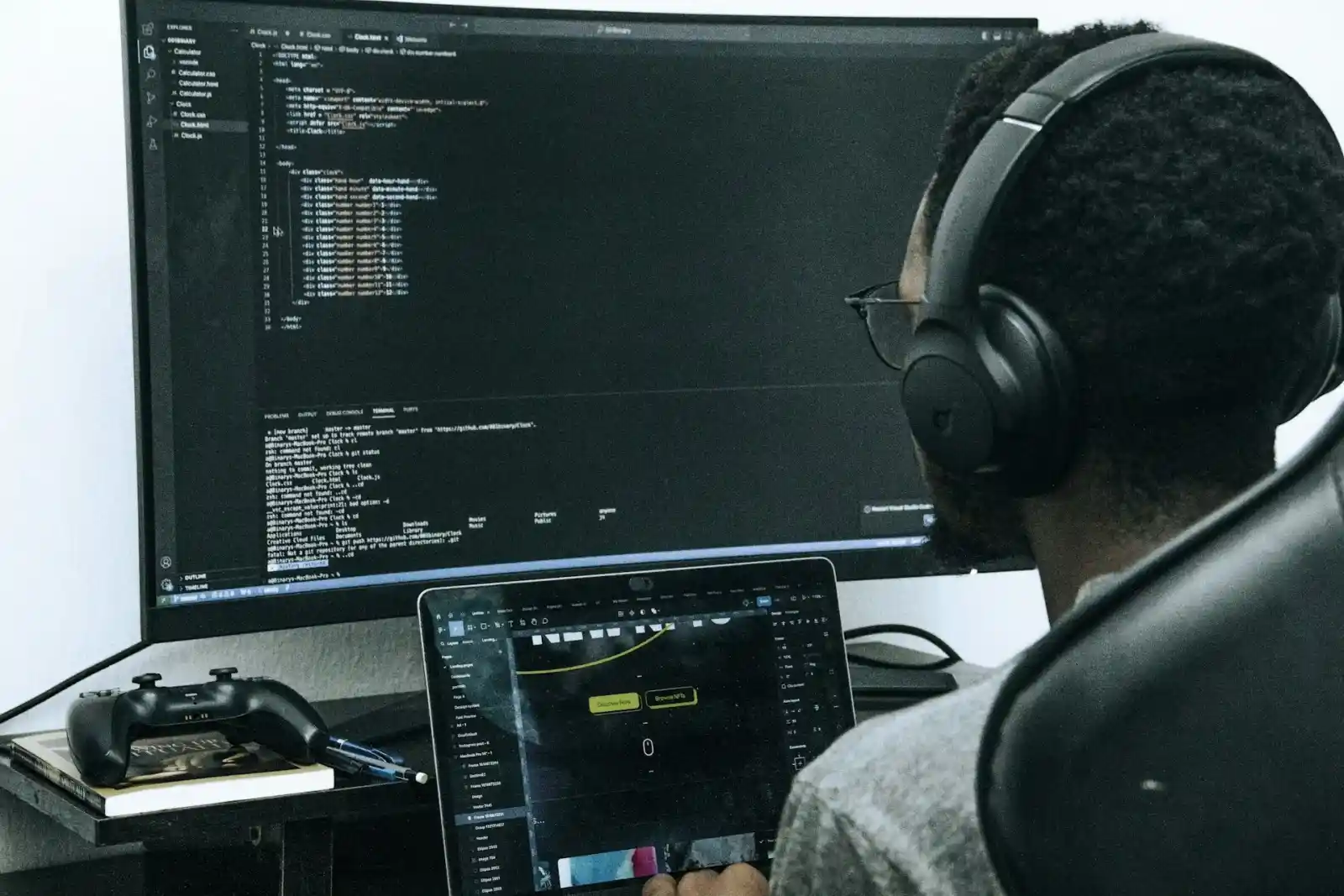
A colleague shows a working prototype he put together in an afternoon with an AI tool. The next day comes the question: can we not do this more often? That’s the moment a one-off experiment has to become a working method, and where anything-goes stops being good enough.
We work AI-assisted ourselves. The workflow that holds up isn’t about the newest tool, but about what surrounds it: sharp briefs, small steps, and a professional who reviews what the AI proposes.
Start with the challenge, not the tool choice
Any list of recommended AI tools goes out of date fast; the principles underneath it do not. The first principle: a usable result starts with a sharp brief. Ask the AI for “a planning tool” and you get something arbitrary back. Describe who the user is, which step in the process is causing friction, and what the first version needs to do at a minimum, and you get something back that can actually be reviewed.
The second: work in small steps. One well-defined change at a time, test it straight away, then move on. AI tools generate a thousand lines of code as easily as ten, and that ease is exactly the risk. The bigger the step, the smaller the chance that anyone can still see what has actually changed.
How we work AI-assisted ourselves
In our own projects, AI writes part of the code, but the workflow around it is the same as for hand-written code. Everything goes through version control, so every change is visible and can be undone. An engineer reviews every change before it gets merged. Tests run automatically, so a new addition doesn’t quietly break something else.
The difference with pure vibe coding sits in that one word: reviews. The AI proposes, the professional decides. Skip that check and you build faster, but you stack up assumptions nobody has tested. You won’t notice that in the demo. You’ll notice it months later, at the first outage or the first security incident.
What every workable workflow needs, at a minimum
The exact set-up differs per team, but there are four things we think you shouldn’t compromise on:
- Version control, so every change can be traced and undone, even if an AI wrote it.
- Review by someone with expertise before code gets merged. Not as a spot check, but every time.
- Tests on the core functionality, so you can make changes with confidence, without checking everything by hand.
- Extra attention for logins, forms and integrations: that’s exactly where a mistake in generated code is most dangerous.
Prototypes are allowed to break, production is not
With that kind of workflow, AI-assisted development has become our normal way of working. That’s something different from pure vibe coding, where nobody with expertise is watching. For a prototype, a demo or a throwaway tool, that’s fine: the thing is allowed to break, nothing is at stake. As soon as customer data flows through it, or a business process leans on the result, that lighter approach stops being responsible. At that point, quality, security and maintainability aren’t nice-to-haves but requirements, and no AI tool sets those on its own.
Do you have a prototype like that starting to turn serious? Have someone with expertise look at it before it quietly becomes production. We review what’s there, turn it into robust software, and use ongoing development and maintenance to build a workflow around it that keeps it that way. And if you want to explore more broadly where AI adds value in your organisation, we’re happy to think it through with you, drawing on our approach to AI implementation.