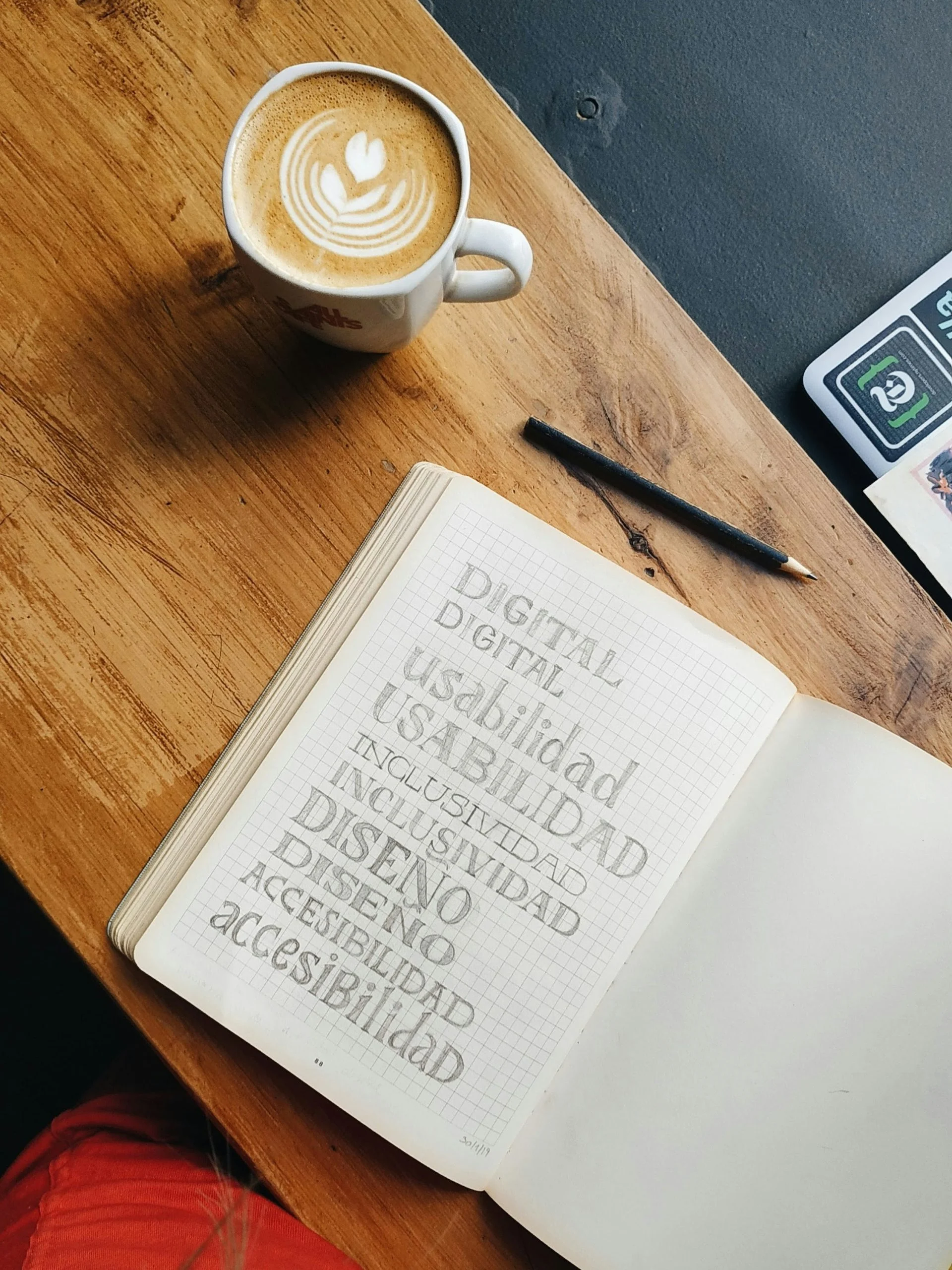
Digital accessibility is not a one-off project you carry out, but an ongoing activity, which is why guidelines have been drawn up. These are updated continuously. Earlier we wrote a “good reads” article about accessibility, in which we shared interesting links and articles. In this series of articles we explain why digital accessibility matters so much, and we share insights you can use yourself to meet the guidelines. In this first part we explain why this topic matters to you too, and we focus on the technical side.
What is digital accessibility?
Everyone has the fundamental right to take part in society. Using computers and phones is of course part of that. Digital accessibility means that everyone must be able to use your website, application or online document without any hindrance, including people who use hardware or software outside the standard, or users with a physical disability. Online, the term “accessibility” or “a11y” is often used for digital accessibility.
Who is this for?
According to the World Health Organization, 285 million people are visually impaired and around 1 billion people (15% of the world population) live with a disability. A quarter of the Dutch population has one or more physical or mental impairments that make it harder to use websites not optimised for accessibility.
Although websites and mobile applications have become increasingly intelligent and creative over time, they have also become increasingly less accessible for these users.
How do you make a website or application accessible?
The guidelines used as the starting point for accessibility are called the “Web Content Accessibility Guidelines”, often shortened to WCAG. To get an idea of the current state of a website, you can have research carried out into the extent to which your website meets these guidelines.
The WCAG is divided into four different principles: perceivable, operable, understandable and robust. Each principle contains success criteria against which a website can be tested. Each criterion has a certain level (A, AA or AAA), with AAA being the highest level.
Once it is clear which success criteria a website does and does not meet, parties can be brought in to make changes. In the ideal situation this is a continuous process, in which the success criteria are reviewed again every time the website is changed technically or in terms of content, so that the website keeps meeting the criteria.
The key technical priorities in short
We have bundled a number of topics that let you tackle the bulk of the success criteria on the technical side.
Read-aloud function
For visually impaired people, a website needs to be readable aloud. Adding a read-aloud function to the website is recommended for this.
Keyboard navigation
All pages and elements within the website need to be reachable with the keyboard (as an alternative to the mouse). It also needs to be clearly visible which part of the screen has focus. There also needs to be a skip block to make keyboard navigation easier (this lets you skip the header with one press of a button and go straight to the content).
HTML code
The HTML code needs to be valid and the structure (in code and headings) needs to be correct. Think, for example, of the right hierarchy of headings.
Alt tags
All images within a website need a text alternative, so that visually impaired people can also take in this information. With read-aloud software, for example. This text can also be converted into braille.
Forms
It needs to be clear which fields are mandatory and how fields are best filled in. What a user enters also needs to be checked.
Video use
Subtitles and an audio description need to be present. An alternative also needs to be available for the video. The minimum requirement is a written-out text.
Links
The text description of a link needs to make it clear what happens when users click the link. Text such as “click here” does not meet the requirements.
Scaling
When narrowing or widening the web browser (or zooming in and out up to 200%), there should be no loss of content or functionality.
Do you want your website tested for accessibility too?
Then get in touch with us. You are also in the right place with us for carrying out the tasks described above.