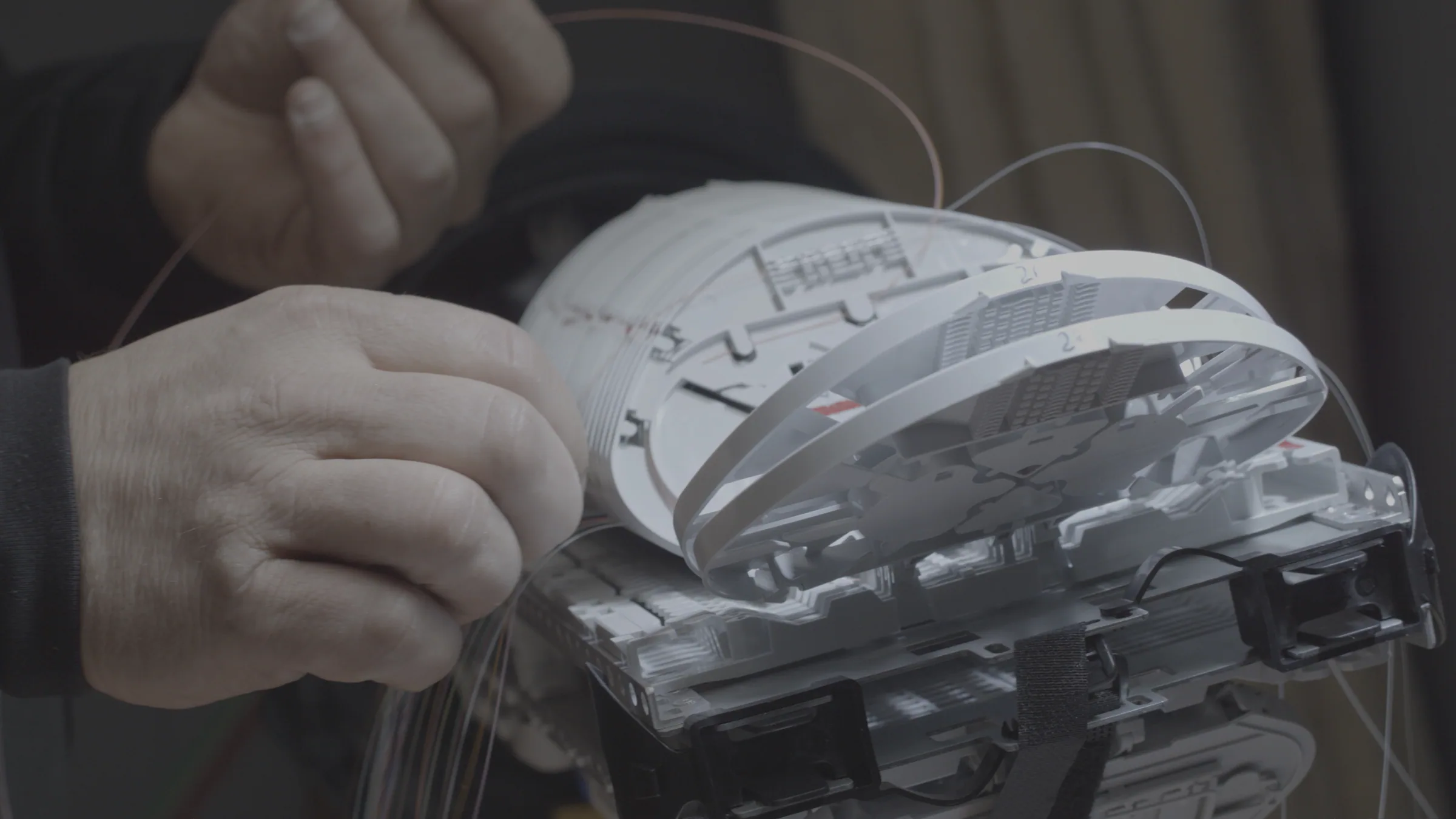
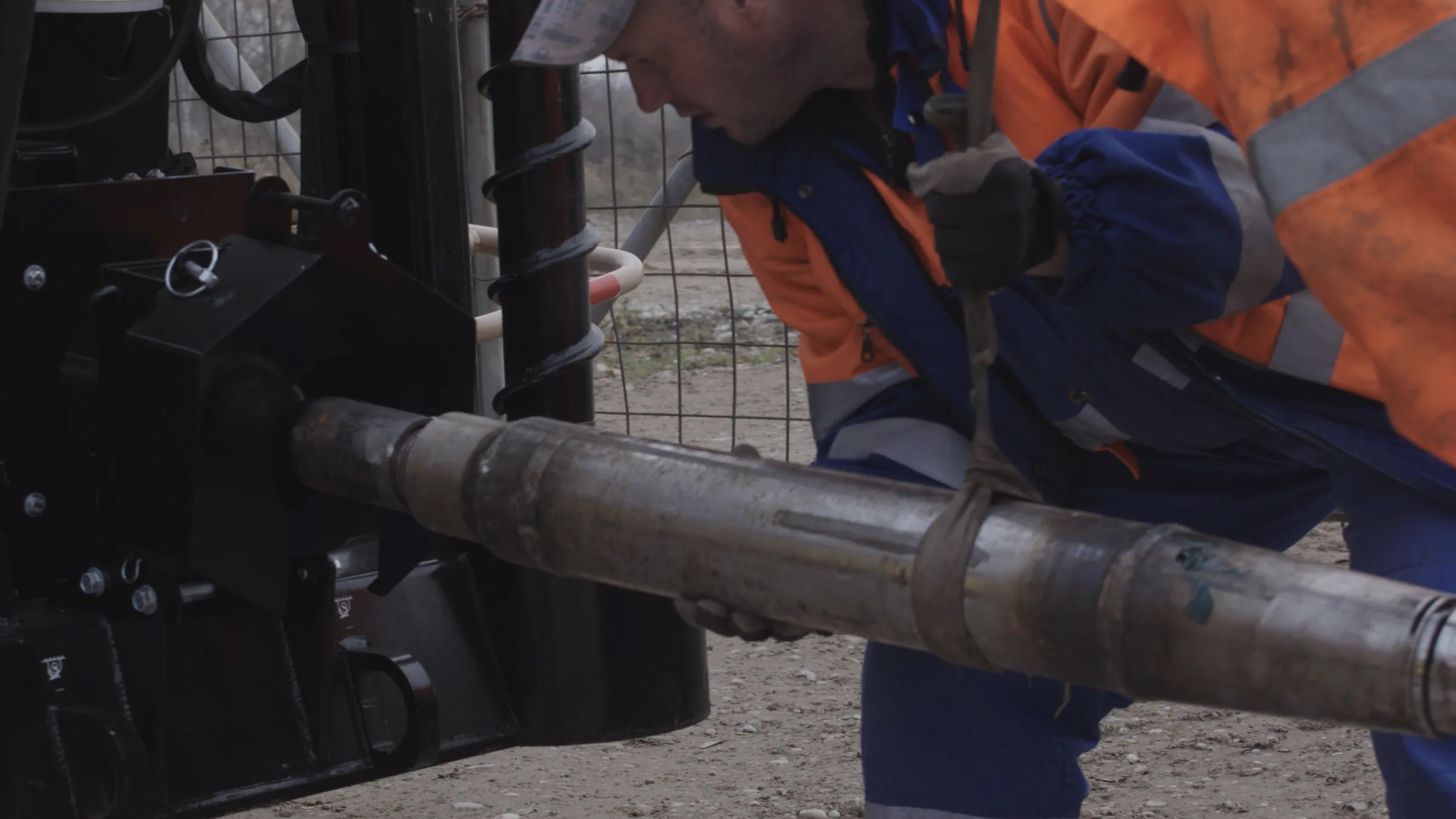
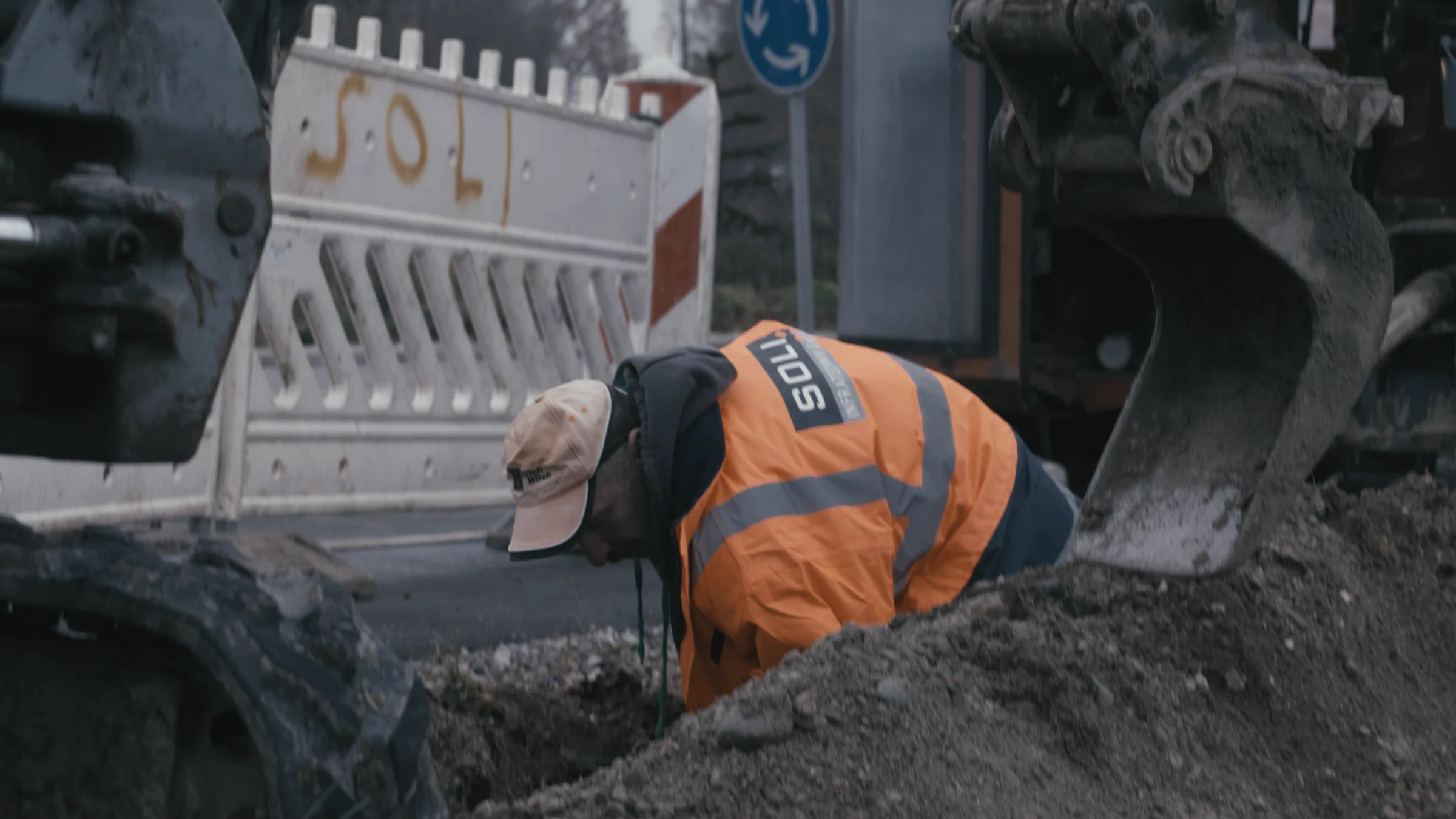
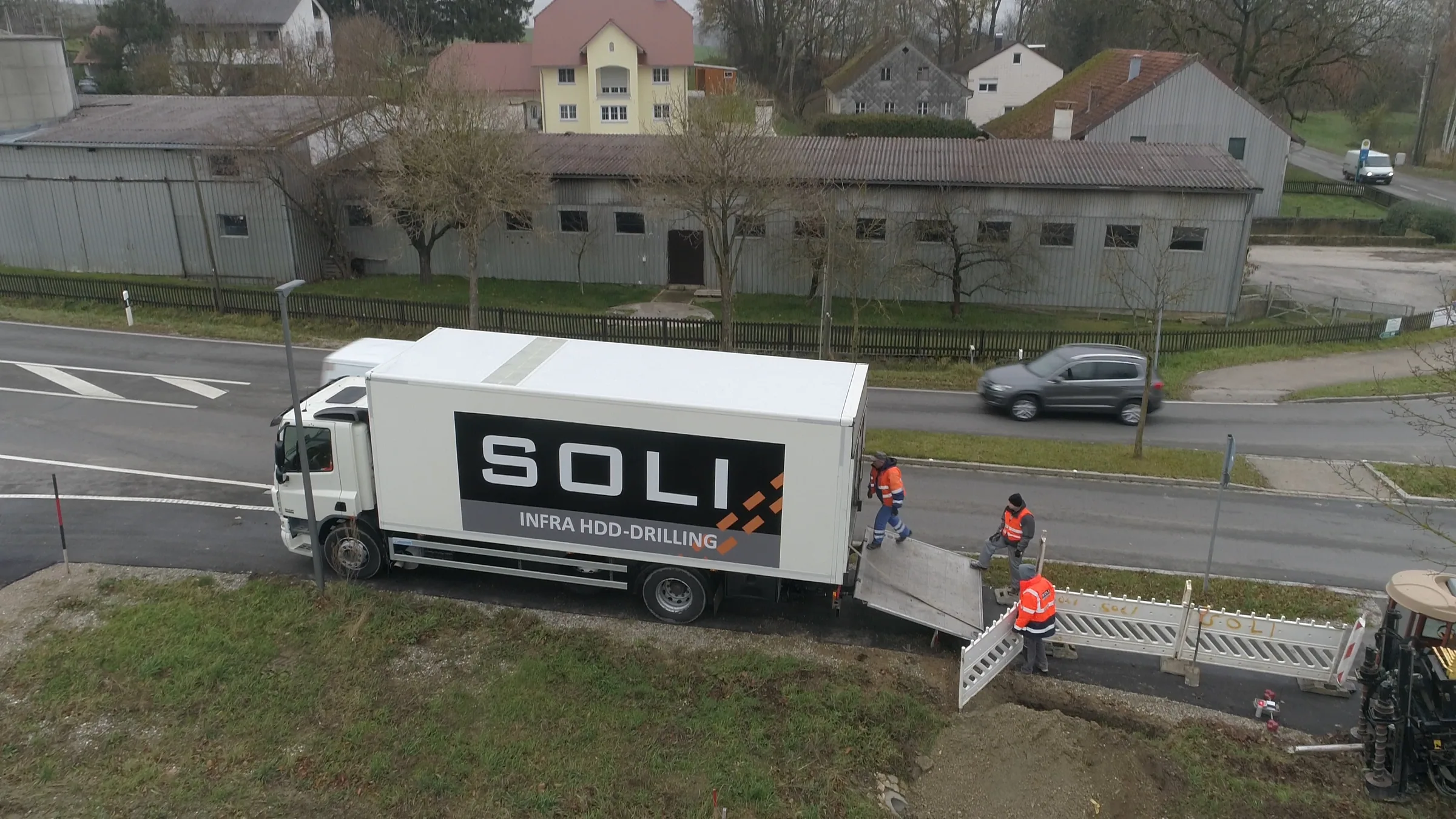
Soli Infratechnik was a German company in fibre-optic and infrastructure engineering. In ten years it grew from a handful of employees to over seven hundred, with dozens of subcontractors alongside them and eventually a nationwide organisation. Projects consisted of hundreds of addresses and work positions. In the field it was about digging trenches, directional drilling under roads, pulling cables through, fitting splice closures, placing street cabinets and connecting up in the meter cupboard. That called for an overview that moved with the work.
When we started in 2014, we recorded work address by address for one running project. As the company grew, the software grew with it: from that one self-contained assignment to a platform that managed the entire process, and after that the administration and invoicing around it. There was no delivery date and no final version; for years we released new versions that matched how the work developed and scaled up.
Work in layers
From trench to light in the fibre
Most of the work took place below ground. Every element needed its own recording, inspection and settlement in the system.
The challenge
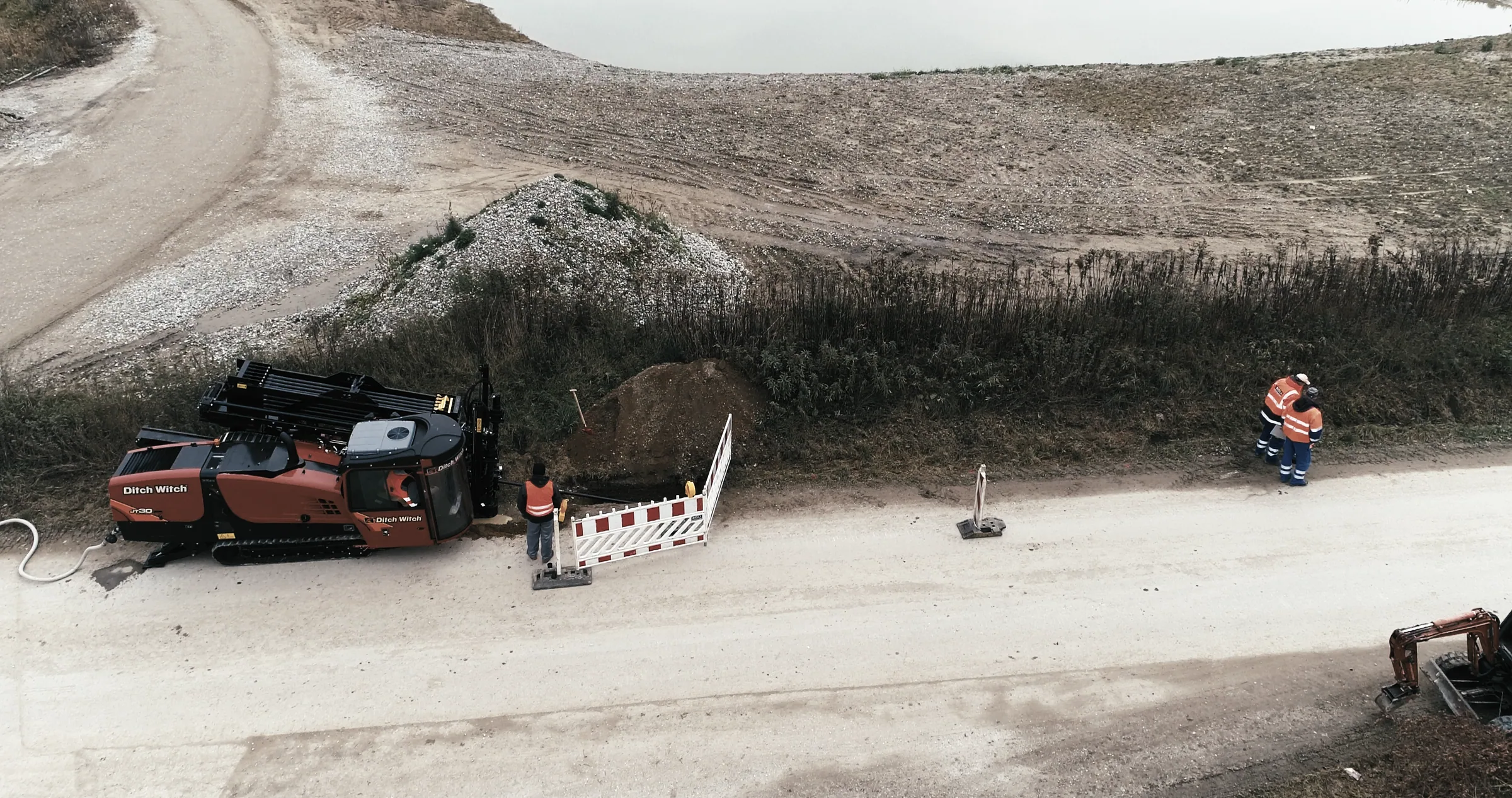
Digging and drilling were done by machine, but accounting for the work was manual. What had been carried out at an address was kept on paper by the crew, and that had to be at the office before it could be processed. Project managers were therefore steering on a picture that lagged behind reality, and every transfer from paper to system was a chance of an error.
That same paper chain carried the invoicing. The completed work was on forms, the price agreements per subcontractor in a different administration; someone had to bring those two together before an invoice could go out. That did not scale with the growth: more crews and more projects mainly meant more sorting out and more corrections.
The work was done, but nowhere did it add up as a whole.
Our approach
We digitised the entire administration, starting with the work in the field, so that recording it outside ran straight through to processing and invoicing:
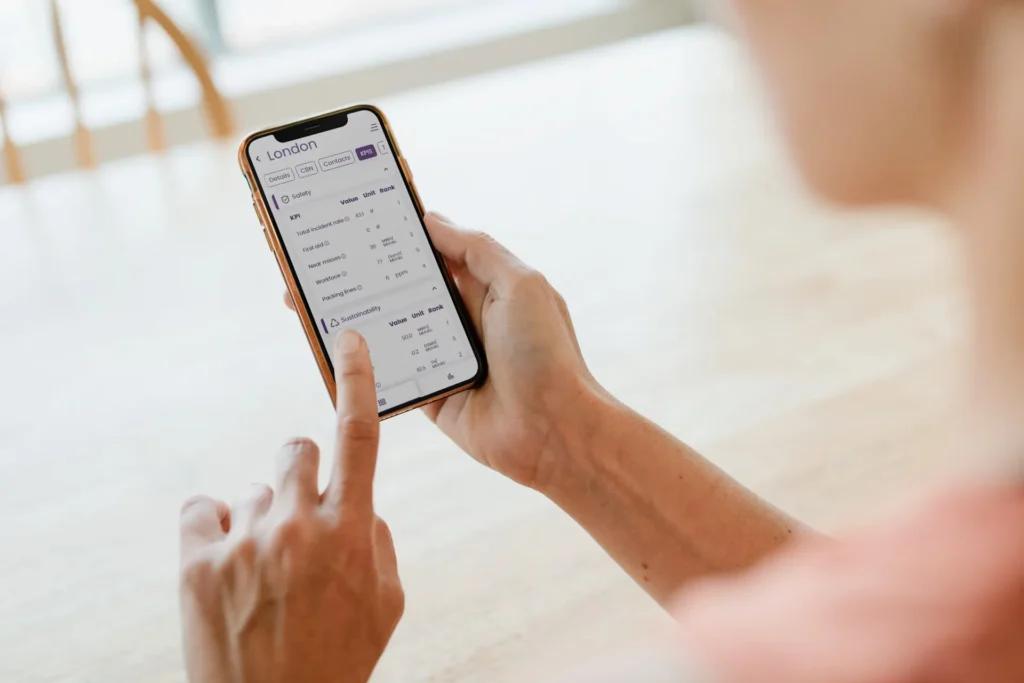
- A web platform in which complete roll-out programmes were managed, from work preparation to delivery, with central overview and steering on progress
- A tablet app in which field engineers and subcontractors recorded work per address with photos and documents, which worked offline and synced later
- Integrations with the systems of suppliers and clients, in which work was reported through automatically and purchase order requests were created straight away
- Invoicing on the basis of signed-off work, with price lists per subcontractor and checks before sales and purchase invoices were sent
The technology developed along with the use, while the work carried on. New parts connected to what was already there. That was necessary: an organisation that directs this many people every day cannot stop to replace a system.
The result
Project managers saw progress and outstanding work straight away. Field engineers recorded work in the app, with photos as the handover between crews that never saw each other. The inspection crew drew on photos where the fibre had to run under the garden, and the crew that blew the fibre through the duct indicated where the cable entered the house. Discussions about what exactly had been done disappeared, because the work was recorded per address. With that overview project managers could move crews, hold subcontractors to account for work left undone and see which streets were ready for the next step. Management had real-time insight into how projects and departments were performing.
Work signed off in the field became a correct invoice in the office, without detours.
In 2024 Soli was acquired by an investment company and the collaboration ended. In the years before that, the system changed technical foundation several times, from Meteor to Vue with Quasar and an API on WordPress, then Laravel and later separate integration services, while the work carried on without standing still.
Soli Infratechnik laid fibre in Germany with software that connected work in the field and the administration directly, so progress stayed visible and invoices came out of the same recorded work.
Let’s talk
Tell us about your challenge. We’ll think along.
A reply within one working day. No account managers, no sales pitch.