Services - Data & integrations
One reliable flow of information between all your systems.
CRM, ERP, e-commerce and everything in between. We develop the APIs, integrations and dashboards that make them one whole: a single source of truth, real-time insight and reports that write themselves.
Data in silos and copy-paste work between systems are slow and error-prone. We solve that where it starts - in the data flows themselves - instead of layering yet another export on top.
- API integrations with your existing packages and platforms
- Dashboards and reporting on a central data layer
- Data migrations without loss or downtime
- Predictive analytics once your data is in order
From silos to one flow
Five copies of the same data point become one record.
The same data, kept in five places: once it comes together in one flow there is one version that is right, and the reports write themselves.
Our tech stack
PostgreSQL Python Azure REST & GraphQL
Start here - Data (warehouse) scan
A clear view of your data flows in one week - and where they pinch.
We map your systems, integrations and manual in-between steps. You get a clear overview with risks and a concrete plan - not a report for the drawer.
1 week
fixed timeline
1 map
of all your data flows
1 plan
prioritised by impact
The approach
The common thread is reliability.

Reliability is not proven in a demo, but over years.
The difference between a solution that survives a demo and one that runs for years lies in what happens when something fails: error handling, retries, monitoring and logging are part of it from day one. That is why we prove everything in parallel on real data first, before anything goes live.
A dashboard on figures that are wrong is worse than no dashboard.
The signals
- Orders retyped by hand
- Customer details that are just slightly different in three systems
- A monthly report that takes days to produce and is outdated the moment it is done
For your team it stays simple at the front: manual work disappears, figures are correct and traceable to the source. The complexity - data mapping, failure scenarios, refresh rates - we solve behind the scenes.
What we do
Three services, one coherent whole.
Integrations, dashboards and migrations interlock: an integration feeds the dashboard, and a migration is often the start of a bigger journey - once your data sits clean in one place, the next step becomes the obvious one.
API integrations
Reliable integrations with your existing packages and platforms - from ERP and CRM to banks and e-commerce. Designed for the day something fails, with error handling, retries and monitoring.
Dashboards & reports
Real-time insight on one central data layer: reports that write themselves, instead of manual work every month. From steering on the shop floor to a management report that is ready whenever you need it.
Data migrations
From old to new without loss or downtime - often the first step towards a future-proof landscape. With dry runs and validation, and the old system stays in place until the proof is delivered.

Rather get straight to it? Jasper Kums, partner at Eenvoud, will happily think along with you about how your systems become one whole.
In practice
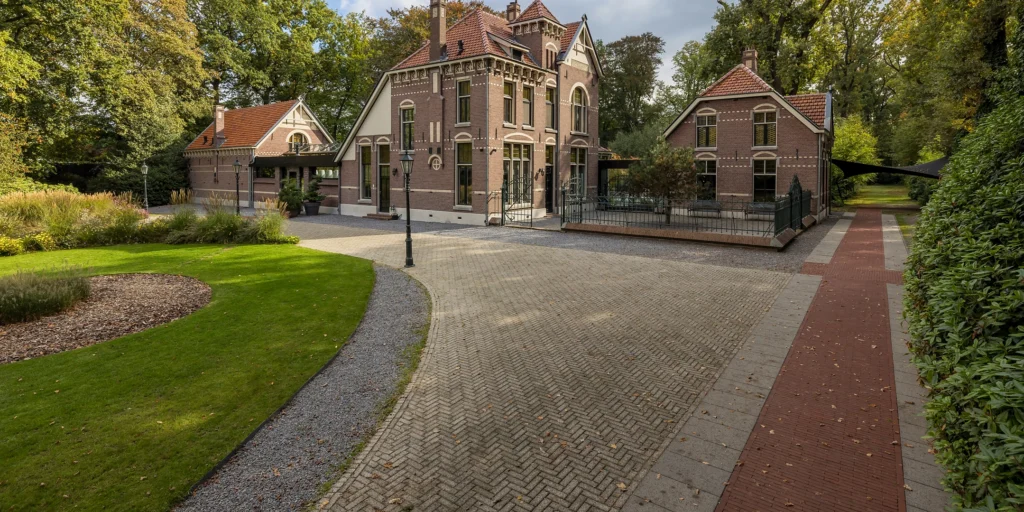
Honders & Alting Makelaars o.z.
A villa in Vught and a house on Ibiza, in the same list
One list in which a country house in Oisterwijk and a house in Spain sit side by side - the one entered by hand, the other arrived overnight.
View case →
Swishfund
From building everything to running the engine
Eight years of the same core, with three bank integrations, two countries and two portals built on it in that time - without ever starting over.
View case →Reliability is not proven in a demo, but over years. Soli Infratechnik has been working with one digital workflow for 700+ employees across twelve locations for ten years; we have worked with Swishfund and Van Amerongen for eight years, and with Metics for five. Integrations that run today are built to still do so years from now.
From scan to maintenance
From separate systems to one whole, in weeks.
Three phases, each with a concrete result - and you decide per phase whether we continue.
1 week
Data (warehouse) scan
We map your systems, integrations and manual in-between steps, in a fixed one-week timeline. You receive one map of your data flows and a plan, prioritised by impact.
week 2-6
Build & prove on real data
We build in small steps - a first integration or dashboard is typically up within a few weeks. Everything runs in parallel on real data first, without affecting your process, until the numbers demonstrably match.
ongoing
Go-live, monitoring & maintenance
What has been proven goes live in a controlled way. From then on we watch the data flows with logging, alerts and periodic checks - we spot a failure or a changed external API before your users notice anything.
Frequently asked questions
What you want to know before you start.
Where do we start?
Almost always with the Data (warehouse) scan. In one week we map your systems, integrations and manual in-between steps - including the risks nobody has in view any more. You get one map of your data flows and a plan prioritised by impact. You can bring that to us, but to another party just as well: the plan is yours.
What does an integration project cost?
That depends on the number of systems, the quality of their APIs and the state of your data - and we sharpen that first. The Data (warehouse) scan has a fixed timeline of one week and gives you a view of the size up front. After that we work in small, budget-controlled steps: after every step you decide whether and how we continue. After the first conversation you get a concrete estimate.
Do we have to get our data in order first?
No - getting it in order is part of the work. The scan exposes where data is duplicated, polluted or scattered, and we build the cleaning up into the project: sometimes as a data migration, sometimes in the data layer beneath your reports. Waiting until your data is perfect is waiting for something that never comes on its own.
Do you work with our existing package?
Almost always. We do not replace your packages, we make them work together - most modern systems for accounting, ERP and CRM have an API for that. For Swishfund we connected three banking platforms (Rabobank Direct Connect, Plaid and Nordigen), and for Manufacturing in your pocket MES, ERP and Excel systems. If a system has no API, there is almost always another route.
Can we start small?
Yes, we even recommend it. One integration that demonstrably works or one dashboard you really steer on says more than a big plan. The scan shows which step has the most impact. It often grows by itself: once the first data flow runs reliably, the next steps get smaller and more predictable.
Let’s talk
Separate systems. One whole.
Tell us what your landscape looks like. We’re happy to think it through with you.